
Short Answer
What It Is / Stage Overview
Building healthy friendships in elementary school is the process of forming and maintaining positive, reciprocal peer relationships during the school-age years, roughly ages 6 to 12. This stage marks a significant shift from the parallel play of early childhood to more complex, emotionally connected bonds. Friendships become a central part of a child’s social world, influencing self-esteem, emotional well-being, and even academic motivation.
During these years, children move from seeing friends simply as playmates to valuing trust, loyalty, and mutual support. They begin to understand that friendships require effort, compromise, and empathy. While every child develops at their own pace, this period is a critical window for learning social skills that will serve them for a lifetime.
Early Elementary (Ages 6–8)
In the early elementary years, friendships are often based on proximity and shared activities. A child might call someone a friend because they sit together in class, ride the same bus, or enjoy the same games. These friendships can be fluid—best friends may change from week to week. Children at this age are still developing perspective-taking skills, so conflicts often arise from misunderstandings or a limited ability to see another’s point of view. However, they are also learning the basics of cooperation, sharing, and turn-taking, which lay the groundwork for deeper connections later.
Later Elementary (Ages 9–12)
As children approach the preteen years, friendships become more stable and emotionally significant. They begin to choose friends based on shared values, interests, and personality traits rather than just convenience. Trust and loyalty become paramount; a friend is someone who keeps secrets, stands up for you, and offers emotional support. Children at this stage can maintain friendships over longer periods and distances, and they start to navigate more complex social dynamics, including cliques and peer pressure. They also become more aware of social hierarchies and may experience the pain of exclusion or betrayal more acutely.
It’s important to remember that there is a wide range of normal. Some children are naturally more introverted and may prefer one or two close friends, while others thrive in larger groups. Neither style is inherently better, and a child’s temperament plays a big role in how they approach friendships.
Typical Signs, Timeline, or Milestones
Parents and caregivers can look for a progression of social behaviors that signal healthy friendship development. These milestones are not rigid deadlines but general patterns observed across many children.
Ages 6–7
- Shows a clear preference for certain playmates and may declare a “best friend,” though that designation can shift rapidly.
- Engages in cooperative play with rules, such as board games or team sports, but may still struggle with losing or taking turns gracefully.
- Begins to understand basic emotions in others (“She looks sad”) but may not yet know how to respond appropriately.
- Friendships are often same-gender, though mixed-gender play is still common.
Ages 8–9
- Friendships become more stable and can last for several months or longer.
- Shows increased empathy and can offer comfort to a friend in distress.
- Understands the concept of fairness and may become upset when a friend is treated unfairly.
- Begins to value shared secrets and inside jokes as markers of closeness.
- May start to form small, informal groups or clubs based on common interests.
Ages 10–12
- Friendships are based on trust, loyalty, and emotional support. A friend is expected to be reliable and keep confidences.
- Can maintain friendships even when not in the same class or school, using phone calls, texts, or online games (with supervision).
- Navigates more complex social situations, such as resolving misunderstandings without adult intervention.
- May experience peer pressure and the desire to fit in, which can sometimes lead to excluding others or changing behavior to gain approval.
- Shows a growing ability to see a conflict from multiple perspectives and negotiate compromises.
Some children may have a wide circle of acquaintances but few deep friendships, while others invest heavily in one or two best friends. Both patterns are typical as long as the child feels content and supported. A child who is happy playing alone sometimes is not necessarily lonely; solitude can be a healthy part of self-regulation.
Causes / Why It Happens
The ability to build healthy friendships during elementary school is driven by a combination of cognitive, emotional, and social development, as well as environmental influences.
Cognitive advances: Around age 6 or 7, children enter what psychologist Jean Piaget called the concrete operational stage. They become capable of logical thought, which helps them understand rules, fairness, and cause-and-effect in social interactions. More importantly, they develop perspective-taking—the ability to see a situation from another person’s point of view. This skill is the foundation of empathy and conflict resolution. By age 10 or 11, many children can consider multiple perspectives simultaneously, which allows for more nuanced friendships.
Emotional regulation: As the prefrontal cortex matures, children get better at managing impulses and strong emotions. They can wait their turn, control angry outbursts, and recover more quickly from disappointments. This self-regulation is essential for maintaining friendships, which inevitably involve disagreements and hurt feelings.
Social cognition: Children learn to “read” social cues—facial expressions, tone of voice, body language—and adjust their behavior accordingly. They begin to understand that friendships have unwritten rules, such as reciprocity (“I help you, you help me”) and commitment. This social awareness grows through practice and feedback from peers.
Environmental factors: School provides a daily laboratory for social interaction. Extracurricular activities, neighborhood play, and family gatherings offer additional opportunities to practice friendship skills. Parents and caregivers also play a crucial role by modeling healthy relationships, coaching children through social challenges, and creating a home environment where feelings are discussed openly.
It’s important to note that while these developmental changes create the capacity for deeper friendships, the actual quality of a child’s friendships depends heavily on experience. Children who have repeated positive peer interactions tend to build stronger social skills, while those who face rejection or isolation may need extra support to catch up.
What Parents Can Do
Parents and caregivers can actively support their child’s friendship journey without taking over. The goal is to be a coach and a safe base, not a director.
- Model healthy relationships. Children learn by watching. Show kindness, active listening, and respectful conflict resolution in your own interactions with family, friends, and even strangers. Narrate your thought process: “I’m feeling frustrated, so I’m going to take a deep breath before I respond.”
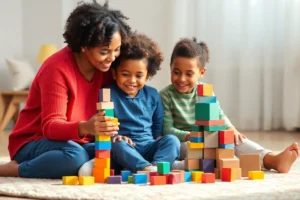
- Arrange low-pressure playdates. For younger elementary children, one-on-one playdates in a familiar setting work best. Keep them short (1–2 hours) and plan a simple activity, like baking cookies or building with blocks. As children get older, they can help plan the activity and may prefer group outings.
- Teach concrete social skills. Practice greetings, asking to join a game, taking turns, and giving compliments. Role-play common scenarios, such as what to say when you want to play with someone or how to respond if a friend says something hurtful. Keep it light and playful.
- Coach through conflicts, don’t solve them. When your child has a disagreement with a friend, listen without judgment. Help them label their feelings (“It sounds like you felt left out”) and brainstorm solutions together. Ask open-ended questions: “What do you think you could do next time?” Avoid calling the other child’s parent unless safety is at risk; instead, empower your child to handle it with your support.
- Encourage empathy. Read books or watch shows that explore friendship themes, and discuss the characters’ feelings. When your child talks about a peer, ask, “How do you think they felt when that happened?” This builds the habit of considering others’ perspectives.
- Support diverse friendships. Encourage connections with children of different backgrounds, abilities, and interests. This broadens your child’s social understanding and reduces prejudice.
- Respect your child’s social style. An introverted child may be perfectly happy with one or two close friends and need more downtime after socializing. An extroverted child may crave constant interaction. Validate their preferences and avoid pushing them to be someone they’re not.
- Monitor for bullying. Keep an eye out for signs that a friendship has turned toxic—repeated exclusion, name-calling, manipulation, or physical aggression. Teach your child the difference between a conflict (a mutual disagreement) and bullying (a repeated, one-sided power imbalance). If you suspect bullying, work with the school to address it.
- Be a safe person to talk to. Create daily moments—during dinner, car rides, or bedtime—where your child can share without fear of judgment or immediate problem-solving. Sometimes they just need to vent.
What not to do: Avoid forcing your child to be friends with someone they don’t connect with, criticizing their friends in front of them, or over-scheduling so many activities that there’s no time for unstructured socializing. Also, resist the urge to intervene in every minor spat; learning to navigate small bumps is how children build resilience.
When to Contact a Doctor / Red Flags
While ups and downs in friendships are normal, certain patterns may signal that a child needs extra support from a pediatrician, school counselor, or child psychologist. This is not a medical emergency list, but it highlights when professional input is appropriate. If a child expresses thoughts of self-harm or harming others, seek emergency help immediately through local emergency services.
Consider reaching out to a professional if you observe any of the following over a period of weeks or months, especially if they interfere with daily life:
- Persistent social isolation: The child has no friends, is consistently excluded, and expresses sadness or frustration about it. They may spend recess alone every day or avoid social situations entirely.
- Extreme shyness or social anxiety: The child is so fearful of social interactions that they refuse to participate in class, avoid birthday parties, or become physically ill (stomachaches, headaches) before social events.
- Frequent, intense conflicts: The child is involved in repeated arguments or physical fights that lead to distress, school discipline, or loss of friendships. They may have trouble understanding others’ perspectives even with coaching.
- Signs of being bullied: Unexplained injuries, lost or damaged belongings, frequent complaints of headaches or stomachaches, sudden reluctance to go to school, or a drop in academic performance. The child may seem anxious, withdrawn, or have trouble sleeping.
- Bullying others: The child repeatedly uses aggression, threats, or manipulation to control peers. They may show little empathy or blame others for their actions.
- Sudden loss of interest in friends: A child who previously enjoyed socializing withdraws completely and shows no motivation to connect. This can be a sign of depression or another underlying issue.
- Social difficulties alongside other concerns: If friendship struggles are accompanied by persistent sadness, irritability, changes in appetite or sleep, difficulty concentrating, or behavioral outbursts, a broader evaluation may be needed.
A pediatrician can rule out medical causes (such as hearing or vision problems that might affect social interaction) and refer you to a mental health specialist if needed. School counselors are also excellent resources; they can observe your child in the social setting and provide skill-building groups or individual support.
Common Myths or Misconceptions
- Myth: Children will naturally make friends without any help.
Fact: While some children are naturally outgoing, many need explicit guidance and practice. Social skills are learned, just like reading or math. Parents and teachers can teach conversation starters, conflict resolution, and empathy, which significantly improve a child’s ability to form and keep friends. - Myth: A child must have a best friend to be socially healthy.
Fact: Some children are content with a wider circle of casual friends or a few close companions without labeling one as the “best.” What matters is the quality of the relationships—feeling supported, accepted, and valued—not the label. Forcing a child to find a best friend can create unnecessary pressure. - Myth: Popularity equals healthy friendships.
Fact: Popularity is often based on social status, dominance, or superficial traits, not genuine connection. Research shows that having a few close, supportive friends is more strongly linked to well-being than being widely known. A child with one or two true friends may be far happier and more resilient than a “popular” child surrounded by shallow relationships.
FAQ
How can I help my elementary school child make friends?
Encourage playdates, model friendly behavior, and teach conversation starters. Respect your child's temperament; some need more time. If they struggle, role-play social scenarios and involve the teacher for support. Avoid forcing friendships or criticizing their choices.
When do children typically form close friendships?
Around ages 6-8, friendships are often based on shared activities and can change frequently. By ages 9-12, they become more about trust and loyalty, with deeper emotional bonds. Every child is different; some form close bonds earlier or later, and both patterns are normal.
What can parents do to help with friendship conflicts?
Listen without judgment, help them label feelings, and brainstorm solutions together. Avoid solving the problem for them. Teach them to apologize sincerely and set boundaries. If conflicts become repeated or one-sided, monitor for bullying and involve the school if needed.
When should a parent contact a doctor about friendship issues?
If your child shows persistent sadness, withdrawal, or anxiety about social situations, or if you suspect bullying. Also, if social difficulties affect school performance or self-esteem, consult a pediatrician or school counselor. For immediate safety concerns like self-harm, seek emergency help.






Leave a Reply