
Short Answer
What It Is / Stage Overview
Social-emotional development is how children learn to understand and manage their feelings, build relationships with others, and develop a sense of who they are. During the preschool years—roughly ages 3 to 5—this area of growth takes off. Your child is moving from the parallel play of toddlerhood into a world of imagination, early friendships, and big emotions. They’re beginning to grasp that other people have thoughts and feelings that may be different from their own, a skill called theory of mind.
This stage is marked by both exciting leaps and everyday challenges. One moment your preschooler may comfort a crying friend; the next, they may dissolve into a tantrum because their sandwich was cut into triangles instead of squares. All of this is typical. Every child develops at their own pace, and there is a wide range of what’s considered normal. The following breakdown by age offers a general guide, not a checklist.
At 3 Years Old
Three-year-olds are beginning to show interest in other children, though they still spend a lot of time in parallel play. They may copy adults and friends, show affection openly, and start to take turns with guidance. Emotions can be intense and change quickly. Many 3-year-olds can name basic feelings like happy, sad, and mad, and they may look to caregivers for comfort when upset.
At 4 Years Old
Four-year-olds often enjoy playing with other children and may have a “best friend.” Their imagination is in full bloom, and pretend play becomes more elaborate. They’re learning to cooperate, negotiate, and follow simple rules in games. Empathy is growing: they might notice when a friend is sad and try to offer a toy or a hug. However, they still struggle with impulse control and may need help resolving conflicts.
At 5 Years Old
By age 5, many children can express a wider range of emotions with words, follow rules more consistently, and show greater independence. They’re better at taking turns, sharing, and understanding the concept of fairness. Friendships become more stable, and they may seek out peers with similar interests. While tantrums are less frequent, they can still happen when a child is tired, hungry, or overwhelmed.
Typical Signs, Timeline, or Milestones
Social-emotional milestones are not rigid deadlines; they’re signposts that help you understand your child’s development. Below are common behaviors you might see at each age. If your child isn’t doing everything listed, that’s often perfectly fine. Some children are more reserved, while others are more outgoing—both are normal.
3-Year-Olds
- Copies adults and friends (e.g., “cooking” in a play kitchen)
- Shows affection for familiar people without prompting
- Takes turns in games when guided
- May get upset with major changes in routine
- Can name a few emotions (happy, sad, mad)
- Begins to show concern for a crying friend or sibling
4-Year-Olds
- Enjoys doing new things and playing with other children
- Engages in cooperative pretend play (“Let’s be superheroes!”)
- Talks about what they like and don’t like
- Can comfort others who are hurt or sad
- May still have difficulty separating make-believe from reality
- Sometimes acts bossy or defiant as they test independence
5-Year-Olds
- Wants to please friends and be like peers
- More likely to agree with rules and take turns without constant reminders
- Shows a growing understanding of right and wrong
- Can express feelings with words more often than with actions
- Enjoys singing, dancing, and acting
- May still have fears (monsters, the dark) and need reassurance
Causes / Why It Happens
Social-emotional development in the preschool years is driven by a combination of brain maturation, language growth, and social experience. The prefrontal cortex—the part of the brain responsible for impulse control, planning, and emotional regulation—is still under construction. This is why preschoolers often act on their feelings before they can think them through. As language skills expand, children gain the words to label emotions and express needs, which gradually reduces frustration-driven outbursts.
Another key factor is the emergence of theory of mind, the understanding that others have their own thoughts, beliefs, and feelings. Around age 4, many children begin to realize that someone else might not know what they know or might feel differently about a situation. This cognitive leap makes empathy and more complex social interactions possible. Additionally, children learn by watching the adults and peers around them. When caregivers model calm problem-solving and name emotions, children absorb those skills. Temperament also plays a role: some children are naturally more cautious or intense, and that’s not a sign of a problem—it’s just who they are.
What Parents Can Do
You are your child’s first and most important social-emotional teacher. Here are practical, everyday ways to support this growth:
- Label feelings. When your child is upset, say, “You look frustrated because the tower fell down.” This builds emotional vocabulary and helps them feel understood.
- Model calm behavior. Narrate your own coping strategies: “I’m feeling frustrated, so I’m going to take three deep breaths.” Children learn more from what you do than what you say.
- Offer choices. Giving limited, age-appropriate choices (“Do you want to wear the red shirt or the blue shirt?”) helps children feel a sense of control and reduces power struggles.
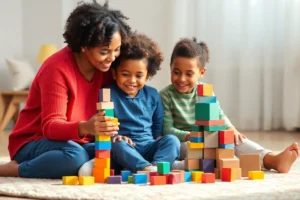
- Encourage pretend play. Join in their imaginary games. Pretend play is a safe space to practice social roles, problem-solving, and empathy.
- Set up playdates. Start with short, one-on-one playdates in a familiar setting. Stay nearby to help navigate sharing and turn-taking, but step back when they’re managing well.
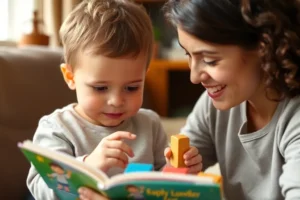
- Read books about feelings. Stories give children language for emotions and show characters working through challenges. Pause to ask, “How do you think she feels right now?”
- Use consistent routines. Predictable daily rhythms help children feel secure, which makes it easier to handle big emotions.
- Praise effort, not just outcomes. Say, “You worked so hard to share that toy with your friend,” rather than only praising success.
- Teach simple calming tools. Practice deep breathing, counting to five, or squeezing a stress ball when calm, so they’re easier to use in the heat of the moment.
What to avoid: Don’t punish a child for having feelings. Instead of “Stop crying,” try “I see you’re sad. It’s okay to cry.” Avoid forcing a child to share before they’re ready; instead, guide turn-taking and praise spontaneous sharing. And try not to compare your child to siblings or peers—each child’s timeline is unique.
When to Contact a Doctor / Red Flags
While variation is normal, certain signs may suggest that extra support is needed. Trust your instincts. If something feels off, bring it up with your child’s pediatrician. You can also discuss concerns at a well-child visit. In an emergency—such as a child harming themselves or others—seek immediate help from local emergency services.
Consider reaching out to a healthcare provider if your preschooler:
- Shows no interest in other children or consistently avoids eye contact and interaction
- Has extreme difficulty separating from you, to the point of panic, beyond the early preschool months
- Engages in frequent, intense aggression (hitting, biting, kicking) that doesn’t improve with guidance
- Cannot calm down within a reasonable time after a tantrum, especially after age 4
- Displays very little range of emotion, or seems persistently sad, withdrawn, or fearful
- Loses skills they once had, such as language or social engagement
- Does not engage in any pretend play by age 4
- Has trouble eating, sleeping, or using the toilet due to emotional distress
These signs don’t necessarily mean something is wrong, but they are worth a conversation with a professional. Early intervention can make a big difference.
Common Myths or Misconceptions
- Myth: Preschoolers should be able to share and take turns without help.
Fact: Sharing is a complex skill that develops gradually. Most preschoolers need adult guidance and plenty of practice. Forcing a child to share before they’re ready can backfire, making them more possessive. Instead, coach turn-taking and celebrate small steps. - Myth: Tantrums mean a child is spoiled or manipulative.
Fact: Tantrums are a normal expression of frustration in young children whose brains are still learning to regulate emotions. They aren’t a sign of bad parenting or a manipulative personality. Responding with calm, consistent limits helps children learn to manage their feelings over time.
FAQ
What are typical social-emotional milestones for a 3-year-old?
At 3, children often copy adults and friends, show affection, take turns in games, and may get upset with major changes. They can name familiar emotions and begin to show concern for a crying friend, though tantrums are still common.
When do preschoolers start making real friends?
Around age 4, many children begin to prefer playing with other children and can form simple friendships. They may have a 'best friend' and enjoy cooperative play, though conflicts are still frequent and part of learning social skills.
How can I help my preschooler manage big emotions?
Stay calm, label the emotion ('You look angry'), and offer comfort. Teach simple calming strategies like deep breathing or a quiet corner. Consistent routines and limited choices help reduce power struggles. Avoid punishing feelings; instead, guide behavior.
When should I worry about my preschooler’s social-emotional development?
Contact your pediatrician if your child shows no interest in other children, has extreme difficulty separating from you, engages in frequent, intense aggression, or cannot calm down after a tantrum by age 4. Also seek help if they lose skills they once had.




Leave a Reply