
Short Answer
What It Is / Stage Overview
Baby milestones are skills or behaviors that most children can do by a certain age range. They cover four main areas: motor (movement), cognitive (thinking and learning), social and emotional, and language and communication. During the first 12 months, your baby will transform from a sleepy newborn into an interactive, mobile little person with a budding personality. It’s an incredible journey—and it happens at a different pace for every child.
Milestones are not a test. They are guideposts that help parents and caregivers know what to expect and when to offer extra support. Some babies race ahead in one area while taking their time in another. A baby who is focused on learning to crawl might temporarily babble less, and that’s perfectly normal. The ranges given here are based on when most babies (about 75% or more) achieve a skill, according to the Centers for Disease Control and Prevention (CDC) and the American Academy of Pediatrics (AAP). If your baby was born prematurely, you’ll want to use their adjusted age (based on their due date) until they are about 2 years old.
In the sections that follow, we’ll walk through typical milestones month by month, explain why these changes happen, and share safe, practical ways to support your baby’s development.
Typical Signs, Timeline, or Milestones
Below is a chronological look at what you might notice during your baby’s first year. Remember, these are ranges, not deadlines. Your baby may reach some milestones earlier or later and still be completely on track.
Newborn (0–2 Months)
- Motor: Moves arms and legs in a jerky, uncoordinated way. Has strong newborn reflexes like rooting and grasping. By 2 months, can briefly lift head during tummy time and may turn head toward sounds.
- Cognitive: Begins to follow objects with eyes and recognizes familiar voices. Prefers high-contrast patterns.
- Social/Emotional: Starts to smile socially (around 6–8 weeks). Enjoys being held and soothed by caregivers.
- Language: Makes cooing and gurgling sounds. Cries to communicate needs.
3–4 Months
- Motor: Holds head steady without support. Pushes up on elbows during tummy time. Brings hands to mouth and may start to bat at toys.
- Cognitive: Tracks moving objects smoothly. Begins to reach for dangling toys. Shows excitement by waving arms and legs.
- Social/Emotional: Smiles spontaneously, especially at people. Enjoys playing with others and may cry when play stops. Copies some facial expressions.
- Language: Babbles with expression and copies sounds. Laughs out loud.
5–6 Months
- Motor: Rolls from tummy to back and back to tummy. Sits with support and may sit briefly without support. Reaches for and grasps objects, passing them from hand to hand.
- Cognitive: Explores objects by mouthing and shaking. Looks for partially hidden objects. Responds to own name.
- Social/Emotional: Recognizes familiar people and may show stranger anxiety. Enjoys looking in a mirror and playing peek-a-boo.
- Language: Strings vowels together (“ah-goo”). Takes turns making sounds with you.
7–9 Months
- Motor: Sits without support. May start to crawl, scoot, or army crawl. Pulls to stand with support. Uses a pincer grasp (thumb and forefinger) to pick up small objects.
- Cognitive: Understands object permanence—looks for dropped toys. Bangs objects together. Watches the path of something as it falls.
- Social/Emotional: May be clingy with familiar caregivers. Has favorite toys. Shows a range of emotions and may be fearful of loud noises.
- Language: Babbles with more consonant sounds (“mamama,” “bababa”). Understands “no” and simple gestures like waving bye-bye.
10–12 Months
- Motor: Crawls well. Pulls to stand and cruises along furniture. May stand alone briefly and take first steps. Uses a pincer grasp to pick up small items like cereal.
- Cognitive: Explores objects in new ways (shaking, banging, throwing). Finds hidden objects easily. Imitates gestures and actions.
- Social/Emotional: Plays simple games like pat-a-cake. Shows preferences for certain people and toys. May have separation anxiety.
- Language: Says “mama” or “dada” with meaning. Tries to imitate words. Responds to simple spoken requests like “come here.”
Causes / Why It Happens
Your baby’s brain is growing at an astonishing rate during the first year. At birth, the brain is about 25% of its adult size; by 12 months, it’s already 75%. This rapid growth, combined with myelination (the insulation of nerve fibers that speeds up signals), allows for more coordinated movements and complex thinking.
Milestones emerge from a mix of biological programming and environmental input. For example, the drive to crawl is hardwired, but babies need plenty of floor time and opportunities to practice. Social smiling appears when the visual and emotional centers of the brain mature enough to recognize and respond to faces. Language development depends on hearing speech and being spoken to directly. Each new skill builds on earlier ones: head control leads to sitting, which frees the hands for reaching, which leads to fine motor skills.
It’s also normal for development to happen in spurts. A baby might seem to stall in one area while the brain focuses on another. This is why pediatricians look at the whole child, not just one milestone.
What Parents Can Do
You are your baby’s first and most important teacher. Simple, everyday interactions are the best way to support development. Here are stage-by-stage ideas:
Newborn (0–2 Months)
- Provide supervised tummy time on a firm surface for a few minutes, several times a day. This builds neck and shoulder strength.
- Talk, sing, and read to your baby. Even though they can’t understand words, they are learning the rhythm of language.
- Hold and cuddle your baby often. Responsive care builds trust and emotional security.
- Use high-contrast toys or black-and-white images to capture their attention.
3–4 Months
- Continue tummy time, gradually increasing duration. Place colorful toys just out of reach to encourage reaching and scooting.
- Imitate your baby’s coos and smiles. This “serve and return” interaction builds brain connections.
- Offer safe, lightweight rattles and textured toys for grasping.
- Gently help your baby practice rolling by placing them on a blanket and slowly guiding their hips.
5–6 Months
- Encourage sitting by propping your baby with pillows or holding them on your lap. Always stay close to prevent falls.
- Play peek-a-boo and hide a toy under a cloth to begin teaching object permanence.
- Introduce solid foods if your pediatrician gives the green light, usually around 6 months. Let your baby explore textures (with supervision).
- Read board books with bright pictures and name objects.
7–9 Months
- Create a safe, baby-proofed space for crawling and exploring. Get down on the floor and play alongside your baby.
- Offer finger foods (soft, small pieces) to practice the pincer grasp. Always supervise eating.
- Narrate your day: “Now we’re putting on your socks. One sock, two socks.”
- Play simple cause-and-effect games like dropping a ball into a container.
10–12 Months
- Provide sturdy push toys (not baby walkers with wheels, which are unsafe) to encourage cruising and walking.
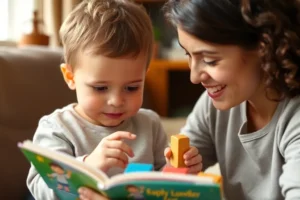
- Read interactive books with flaps or textures. Ask “Where’s the dog?” and let your baby point.
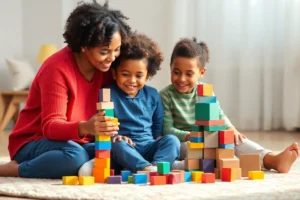
- Offer stacking cups, shape sorters, and large knobs puzzles to build problem-solving skills.
- Celebrate attempts to communicate. If your baby says “ba” for ball, respond enthusiastically and say the word correctly.
Above all, follow your baby’s lead. If they are tired or fussy, take a break. Play should be joyful, not a chore.
When to Contact a Doctor / Red Flags
While every child develops at their own pace, certain signs warrant a conversation with your pediatrician. Trust your instincts—you know your baby best. Contact your doctor if you notice any of the following:
- By 2 months: Doesn’t respond to loud sounds, doesn’t watch things as they move, doesn’t smile at people, or can’t hold head up at all during tummy time.
- By 4 months: Doesn’t bring hands to mouth, has trouble moving one or both eyes in all directions, doesn’t coo or make sounds, or seems very stiff or very floppy.
- By 6 months: Doesn’t roll over in either direction, doesn’t reach for objects, shows no affection for caregivers, or doesn’t laugh or squeal.
- By 9 months: Doesn’t sit with help, doesn’t bear weight on legs with support, doesn’t babble (“mama,” “baba,” “dada”), or doesn’t look where you point.
- By 12 months: Doesn’t crawl or drag one side of the body while crawling, doesn’t use gestures like waving or shaking head, doesn’t say single words like “mama” or “dada,” or loses skills they once had.
If your baby was premature, use their adjusted age. Also, seek immediate medical help if your baby has a seizure, loses consciousness, or has any sudden change in behavior or movement. For non-urgent concerns, you can always bring up development at your well-child visits. Early intervention services are available in many communities and can make a big difference.
Common Myths or Misconceptions
- Myth: All babies should crawl by 6 months.
Fact: Many babies don’t crawl until 8 or 9 months, and some skip crawling altogether. As long as your baby is making progress in other motor skills, it’s usually not a concern. - Myth: Walking early is a sign of higher intelligence.
Fact: The age a child walks has no connection to future IQ. Motor milestones are influenced by temperament, body type, and opportunity, not cognitive ability. - Myth: If a baby isn’t talking by 12 months, they have a language delay.
Fact: First words typically emerge around 12 months, but the range is wide. Some children say a few words at 10 months; others wait until 14 or 15 months. What matters more is that they are babbling, using gestures, and understanding language. - Myth: Using baby walkers helps children learn to walk sooner.
Fact: Baby walkers are dangerous and can actually delay walking. They allow babies to move without practicing balance. The AAP recommends against them. Stationary activity centers or push toys are safer alternatives.
FAQ
What are the most important baby milestones in the first year?
Key milestones include social smiling (2 months), rolling over (4-6 months), sitting without support (6-8 months), crawling (7-10 months), and first words (around 12 months). Every baby is unique, so use these as a general guide.
When should my baby start crawling?
Most babies begin crawling between 7 and 10 months, but some skip crawling and go straight to pulling up and walking. As long as your baby is making progress in other areas, it's usually fine.
How can I encourage my baby's development?
Engage in daily tummy time, talk and sing to your baby, provide safe toys to reach for, and give plenty of floor play. Follow your baby's lead and celebrate small steps.
When should I worry about my baby's milestones?
Contact your doctor if your baby isn't meeting multiple milestones, seems very stiff or floppy, doesn't respond to sounds or faces, or loses skills they once had. Early intervention can help.






Leave a Reply