
Short Answer
What It Is / Stage Overview
Speech and language milestones are the predictable steps most children follow as they learn to communicate. “Late talking” is a term parents and caregivers often hear when a child’s spoken words are fewer or later than expected for their age. It is not a diagnosis but a description of a delay in expressive language—the ability to use words, gestures, and sentences to share thoughts and needs. Receptive language (understanding what is said) may be on track or also delayed.
Every child develops at their own pace, and there is a wide range of what is typical. Milestones are based on what most children (about 90%) can do by a certain age. Missing one milestone does not automatically mean a child has a problem, but it is a reason to pay closer attention and talk with a healthcare provider. The stages below outline the general progression from newborn coos to preschool conversations.
Newborn to 3 Months
In the earliest weeks, communication is about crying, eye contact, and body movements. Babies start to coo and make pleasure sounds. They may quiet or smile when they hear a familiar voice. This is the foundation for later speech.
Infant: 4 to 12 Months
Babbling begins, with strings of sounds like “ba-ba-ba.” By 6 months, babies usually respond to their name and use their voice to express joy or displeasure. Around 9 months, they may understand simple words like “no” or “bye-bye” and use gestures such as waving. First meaningful words often appear close to the first birthday, though some children start a little earlier or later.
Toddler: 1 to 2 Years
This is a period of rapid vocabulary growth. By 18 months, many toddlers use 10–20 words and point to show what they want. By 24 months, they typically have at least 50 words and begin combining two words (“more milk,” “daddy go”). They also follow simple instructions and enjoy listening to short stories.
Preschool: 3 to 4 Years
Speech becomes clearer, and sentences grow longer. A 3-year-old usually uses three-word sentences and is understood by familiar listeners most of the time. By age 4, children tell simple stories, ask many questions, and can be understood by strangers. Late talking at this stage often means the child is still using only single words or has very unclear speech.
Typical Signs, Timeline, or Milestones
Below are the communication milestones most children reach by the ages shown. Remember, these are ranges, not rigid deadlines. If your child is not meeting several milestones or you have a gut feeling something is off, it is worth discussing with a professional.
Newborn (0–3 Months)
- Startles at loud sounds
- Quiets or smiles when spoken to
- Makes cooing sounds
- Cries differently for different needs
Infant (4–12 Months)
- By 6 months: responds to own name, makes sounds like “ga,” “ma,” “ba”
- By 9 months: understands “no,” copies sounds and gestures, uses fingers to point
- By 12 months: says one or two words (“mama,” “dada,” “uh-oh”), tries to imitate words
Toddler (1–2 Years)
- By 15 months: uses 3–5 words, points to one body part
- By 18 months: says 10–20 words, points to show interest, follows simple directions
- By 24 months: uses 50+ words, combines two words, names familiar objects
Preschool (3–4 Years)
- By 3 years: uses three-word sentences, speech is clear to family 75% of the time
- By 4 years: tells stories, asks “who,” “what,” “where” questions, speaks in sentences of 4+ words
Causes / Why It Happens
Late talking can have many different causes, and often no single reason is found. It is important to remember that parents and caregivers do not cause a speech delay through everyday interactions. Some known contributors include:
- Hearing loss: Even mild or intermittent hearing loss from ear infections can affect how a child hears and learns speech sounds.
- Oral-motor difficulties: Problems coordinating the lips, tongue, and jaw can make it hard to form words, as seen in conditions like apraxia of speech.
- Developmental differences: Autism spectrum disorder, global developmental delay, or intellectual disability may include language delays.
- Bilingualism: Learning two languages does not cause a speech delay, but a bilingual child’s vocabulary may be distributed across languages, which can sometimes make it look like they have fewer words in one language. True delays appear in both languages.
- Environmental factors: Limited exposure to language, lack of responsive interaction, or high screen time may contribute, but they are rarely the sole cause.
- Family history: Late talking can run in families, suggesting a genetic component.
In many cases, a child is simply a “late bloomer” who catches up without intervention. However, because it is difficult to predict which children will outgrow a delay, early evaluation is recommended.
What Parents Can Do
Supporting your child’s speech development can be woven into everyday routines. The most powerful tool is responsive, face-to-face interaction. Here are stage-appropriate strategies:
Newborn and Infant
- Talk, sing, and read to your baby from birth. Narrate what you are doing: “Now we’re changing your diaper.”
- Imitate your baby’s coos and babbles. This back-and-forth teaches the rhythm of conversation.
- Use a high-pitched, sing-song voice (parentese)—it captures attention and helps babies hear the sounds of language.
Toddler
- Expand on what your child says. If they say “ball,” you can say, “Yes, a big red ball!”
- Offer choices: “Do you want the apple or the banana?” This encourages a verbal response.
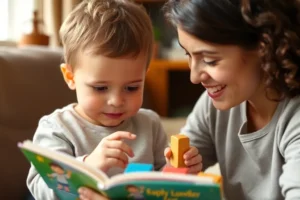
- Read together daily. Point to pictures and name them. Pause to let your child fill in a word.
- Limit screen time. The American Academy of Pediatrics recommends no screen time for children under 18 months (except video chatting) and very limited, high-quality programming for older toddlers, always with an adult watching alongside.
Preschool
- Ask open-ended questions: “What do you think will happen next?”
- Play pretend. Imaginary play builds language and storytelling skills.
- Model correct pronunciation without criticism. If your child says “wabbit,” you can say, “Yes, I see the rabbit!”
- Give your child time to respond. Avoid finishing their sentences unless they are clearly frustrated.
When to Contact a Doctor / Red Flags
Trust your instincts. If you are worried about your child’s speech, it is always appropriate to seek professional guidance. The following signs are reasons to contact your child’s healthcare provider or a speech-language pathologist:
- By 6 months: Does not respond to sound or voice, does not make eye contact.
- By 12 months: No babbling, does not use gestures like pointing or waving.
- By 18 months: No words, does not seem to understand simple requests.
- By 24 months: Fewer than 50 words, not combining two words, speech is very hard to understand.
- By 3 years: Not using three-word sentences, drools excessively or has trouble moving the mouth, speech is unclear to family.
- At any age: Loss of previously acquired speech or language skills, sudden change in behavior, or if you feel something is not right.
For urgent concerns—such as a sudden loss of speech, signs of pain, or difficulty breathing—seek emergency medical care immediately. Otherwise, start with a conversation at your child’s next well-child visit or request a referral for a speech and language evaluation. Early intervention services are available in many communities and can make a significant difference.
Common Myths or Misconceptions
- Myth: Boys always talk later than girls, so there is no need to worry if a boy is late to talk.
Fact: While boys may, on average, develop language slightly later than girls, the difference is small. A significant delay is not explained by gender alone and should be evaluated. - Myth: If a child is not talking by age 2, they will just outgrow it.
Fact: Many late talkers do catch up, but some have persistent language difficulties. Research shows that early intervention leads to better outcomes, so waiting to see is not recommended if milestones are missed. - Myth: Using baby sign language or teaching two languages causes speech delays.
Fact: Sign language and bilingualism do not cause delays. In fact, they can support communication and cognitive development. A true delay will be present in all languages a child is learning.
FAQ
What is considered late talking?
Late talking is when a child’s expressive vocabulary is significantly below age expectations—for example, fewer than 50 words or no two-word phrases by 24 months. It is a descriptive term, not a diagnosis, and can occur with or without other developmental concerns.
When should I worry if my child isn't talking?
Contact your child’s doctor if there is no babbling by 12 months, no words by 18 months, or no two-word combinations by 24 months. Also seek advice if your child stops using words they once had or if you have any concerns about hearing or understanding.
How can I encourage my child to talk?
Engage in daily back-and-forth interactions: talk about what you are doing, read together, sing songs, and expand on your child’s sounds or words. Limit screen time and give your child plenty of opportunities to communicate during play and routines.
Should I wait and see if my child is a late talker?
It is not recommended to simply wait if your child is missing milestones. While some children catch up on their own, early evaluation by a speech-language pathologist can identify those who need support and lead to better outcomes.







Leave a Reply